BMW 309-50652 Harmonic Balancer Diesel 3.0L
fits model: X5, Turbo, Twin. make: Bmw. year: 2009–2013.
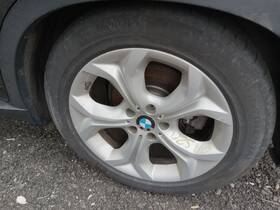
( Part Type: Balancer ), ( Conditions Options: Awd ), ( Genuine Oem: Yes ), ( Ipn: 309-50652 )
Review BMW Harmonic Balancer 3.0l Diesel fits TWIN X5 TURBO 2009–2013
The **BMW 309-50652 Harmonic Balancer** is a precision-engineered component designed specifically for the **3.0L Twin Turbo Diesel (N57) engine** found in BMW models such as the **X5 (E70) from 2009 to 2013**. This critical part plays a vital role in maintaining the smooth operation of the engine by dampening torsional vibrations generated during combustion, thereby reducing stress on the crankshaft, connecting rods, and other drivetrain components. Crafted from high-grade materials, the harmonic balancer features a robust **steel outer shell** reinforced with a **rubber or elastomeric insert**, which absorbs and dissipates vibrational energy to prevent excessive wear and potential catastrophic failure. The **309-50652** is a direct replacement part, meticulously designed to match the exact specifications of the original equipment manufacturer (OEM), ensuring a perfect fit with the engine s crankshaft pulley and mounting points. Its **precision-balanced construction** helps minimize engine noise, enhances drivability, and extends the lifespan of the powertrain, making it an essential upgrade for both performance and reliability. Whether installed during routine maintenance or as part of a rebuild, this harmonic balancer is a high-quality solution that upholds BMW s engineering standards while delivering durability and performance consistency.
### **Pros and Cons of Buying a BMW 3.0L Diesel Twin-Turbo (N57) X5 (2009-2013) with a Harmonic Balancer Issue (Part #50652)**
#### **Pros**
1. **Strong Engine and Performance**
- The **N57 3.0L diesel twin-turbo** is a robust engine known for its torque (up to **400 lb-ft**), making it well-suited for towing and highway driving.
- The twin-turbo setup provides good power delivery across the RPM range, though it can be thirsty.
2. **BMW s Reputation for Luxury and Comfort**
- The X5 is a premium SUV with high-quality interior materials, refined ride comfort, and advanced features (even in older models).
- The **xDrive all-wheel-drive system** improves traction in adverse conditions.
3. **Reliability (Compared to Gas Alternatives)**
- Diesel engines in this era are generally more durable than their gasoline counterparts, especially with proper maintenance.
- The **N57** is a well-developed engine (later iterations improved on early issues), and many examples last **200,000 miles** with care.
4. **Aftermarket Support and Mod Potential**
- The N57 has a strong aftermarket presence, with tuners (like **BM3, JB4, and Stage 2 kits**) available to boost power.
- Upgrading the **turbochargers, injectors, and fuel pump** can extend engine life and improve performance.
5. **Fuel Efficiency (Compared to Gas Engines)**
- While not as efficient as modern diesels, the N57 still offers **better MPG than a comparable gasoline V8 or V10**, making it cost-effective for high-mileage drivers.
6. **Resale Value (For Well-Maintained Examples)**
- BMW diesels, especially the N57, hold value better than some gasoline models due to their durability reputation.
---
#### **Cons**
1. **Harmonic Balancer Failure (A Known Issue)**
- The **50652 harmonic balancer** (and related components like the **crankshaft pulley and damper**) is notorious for failing around **80,000 120,000 miles**.
- When it fails, it often **shatters**, causing **engine damage** (bent rods, cracked blocks) if not caught early.
- **Symptoms:** Vibration, rattling, oil leaks, or sudden engine misfires.
- **Cost:** Replacing the balancer alone is **$1,500 $3,000 ** (labor-intensive), and secondary damage can exceed **$5,000 **.
2. **High Maintenance and Repair Costs**
- BMWs are **expensive to maintain**, especially with specialized parts (turbochargers, injectors, DPF, etc.).
- **DPF (Diesel Particulate Filter) clogging** is a common issue in older diesels, requiring **cleaning or replacement ($1,000 $2,500)**.
- **Turbo failures** (especially on the low-pressure turbo) are frequent, with replacement costs around **$2,000 $4,000**.
3. **Fuel Economy and Running Costs**
- The N57 **consumes diesel aggressively**, especially in stop-and-go traffic.
- **DPF regeneration cycles** (forced cleaning of the filter) can be problematic if the driver doesn t follow proper driving habits.
- **Diesel fuel is more expensive than gasoline** in many regions, offsetting some efficiency gains.
4. **Common Electrical and Software Issues**
- Older BMWs (pre-2015) have **outdated electronics**, leading to **sensor failures, transmission glitches, and infotainment issues**.
- **iDrive system** can be slow or unresponsive, requiring costly updates or repairs.
5. **Transmission Reliability (Especially ZF 8HP)**
- The **8-speed automatic (ZF 8HP)** in these X5s can develop **slipping, delayed shifts, or solenoid failures**, costing **$3,000 $5,000** to rebuild.
6. **Rust and Body Issues**
- Many **2009 2013 X5s** suffer from **underbody rust** (especially in snowy/salted regions), leading to **frame and suspension corrosion**.
- **Sunroof leaks** and **seal failures** are also common, requiring **$1,000 $2,000 ** to fix.
7. **Emissions and Modern Compliance**
- Older diesels **struggle with modern emissions regulations**, leading to **DPF failures, EGR issues, or check engine lights**.
- Some states **ban or restrict diesel vehicles**, making long-term ownership problematic in certain areas.
8. **Depreciation and Market Demand**
- While BMW diesels hold value better than gas engines, they **depreciate faster than newer diesel models** (e.g., N57 vs. N57B30M0).
- **Used market is competitive**, with many buyers preferring **cleaner, lower-mileage examples**.
---
### **Ending Conclusion**
The **BMW X5 (2009 2013) with a 3.0L N57 diesel twin-turbo** is a **capable, torque-rich machine** that excels in **towing, highway cruising, and long-distance driving** but it comes with **significant reliability risks**, particularly the **harmonic balancer failure** and **turbo/DPF issues**.
If you **prioritize power, luxury, and durability** and are **willing to budget for maintenance**, this X5 can be a **great buy** **as long as:**The **harmonic balancer has been replaced** (preferably with an **OEM or high-quality aftermarket part**).
The **turbochargers, injectors, and DPF are in good condition** (get a **full engine inspection**).
The **transmission and electrical systems are functioning properly**.
You **budget for future repairs** (expect **$5,000 $10,000 ** in maintenance over 5 7 years).
However, if you **value long-term reliability, lower ownership costs, or plan to keep the car for 10 years**, a **newer diesel (N57B30M0, N57B30M1, or even a later N57 with updates) or a gasoline V8 (N63) might be a better choice**, depending on your needs.
---
### **Final Recommendation**
**Buy the X5 (with N57 diesel) if:**- You **find a well-documented example** with a **replaced harmonic balancer, no turbo/DPF issues, and a clean service history**.
- You **accept the higher maintenance costs** and **budget for potential future repairs**.
- You **need a powerful, capable SUV** for **towing, highway driving, or off-road light use**.
- You **plan to keep it for 5 7 years** and **are mechanically inclined or have access to a trusted mechanic**.
**Avoid or reconsider if:**- The **harmonic balancer has not been replaced** (or was replaced with a cheap part).
- The **turbochargers, injectors, or DPF show signs of wear**.
- You **cannot afford unexpected repairs** (diesel BMWs are **not cheap to maintain**).
- You **live in a state with strict emissions laws** or **plan to drive mostly in city traffic** (DPF issues will be frequent).
- You **prefer a more reliable, lower-maintenance alternative** (e.g., a **used N57 with fewer miles, a gasoline V8, or a newer diesel model**).
**Best Alternative Considerations:**- **2011 N57 (with updated turbo and balancer)** Fewer early-life issues.
- **N63 V8 (gasoline)** More reliable long-term, better for stop-and-go driving.
- **Used 2015 X5 (with newer diesel or gasoline engine)** Better emissions compliance, fewer rust issues.
- **Audi Q7 or Mercedes M-Class (with similar diesel engines)** Sometimes more reliable in this class.
**Final Verdict:**The **N57 diesel X5 is a great buy for the right buyer** someone who **understands the risks, budgets for maintenance, and wants a powerful, luxurious SUV**. For most casual drivers, however, a **newer or gasoline-powered BMW (or a well-maintained alternative)** may be a **safer and more cost-effective choice**. Always **get a pre-purchase inspection (PPI) from a BMW specialist** before buying.
Details:
BMW 335i 09-10 3.0L, Twin Turbo, diesel. BMW X5 09-13 3.0L, diesel Twin Turbo. BMW 335i 11 3.0L, diesel Twin Turbo.
part #: 309-50652 price
- $100.00
specifications cranshafengin:
- for models: X5, Turbo, Twin
- for makes: Bmw
- for years: 2009-2013
- part type: Balancer
- conditions options: Awd
- genuine oem: Yes
- ipn: 309-50652
returns cranshafengin:
- paid by: Buyer
- policy: Returns Accepted
- time: 60 Days
general cranshafengin:
- Car Truck Parts Accessories > Engines Engine Parts > Crankshafts
- condition: Used
offer cranshafengin:
- sold: 0
- quantity: 1
- availability: In Stock
- options: Ship-to-home
- best offers: True
- started: May 27, 2026
shipping cranshafengin:
- cost: $10.00
- service: Standard
- type: Fixed
- transit: 3-7 Days
- class: Standard
seller cranshafengin:
- rating: 98.5%
- # reviews: 654
- city: Union, New Jersey
payments cranshafengin:
- credit card: Discover
- wallet: Paypal
- other
Bmw 335574 Is Similar To:
- 045-0389 Engine Crankcase Vent Valve Fits Bmw (25% similar) 9i convertible 2-DOOR, base coupe hatchback sedan 4-DOOR, roadster 2-DOOR...(April 1st, 2018)
- 045-0391 Engine Crankcase Vent Valve Fits Bmw (25% similar) Price is for 1 unit. 8L-V8ADJUST quantity as needed. Stock is updated nightly, so it possible that an item shows in but was already sold. Through Fri. The item specifics section also contains important details...(April 7th, 2018)
- 054 06012 280 Wd Express Engine Crankshaft Fits Bmw 884109836612 (34.5% similar) When opening a return, please state the reason for year, make and model of vehicle you purchased part...(October 10th, 2018)
- 054 06022 260 Wd Express Corteco Engine Crankshaft Pulley Fits Bmw (29.8% similar) 0SI sport utility 4-DOOR, base convertible 2-DOOR, coupe sedan wagon luxury m modern SDRIVE30I XDRIVE30I 4-DOOR. 24X7 online. All products are covered by manufacturers warranty. Wd express supplied your vehicles manufacturer with the engine crankshaft pulley. Listing data is catalog provider...(September 13th, 2018)
- 054 06032 001 Wd Express Engine Crankshaft Fits Bmw (33.3% similar) That section provides detailed information about the part and compatible vehicles. All parts come with a 1-YEAR warranty and 30-DAY return period. 0i sport utility 4-DOOR, base convertible 2-DOOR, coupe sedan wagon lightweight m roadster 2-DOOR...(May 20th, 2018)
- 11231714855 Bmw Oem Late Harmonic Balancer Vibration Damper (41.8% similar) ...(February 24th, 2019)
- 11231721169 Bmw Oem Crankshaft Harmonic Pulley Vibration Damper (31.9% similar) Please double check part number for fitment before purchase. Used good crankshaft harmonic pulley vibration damper for bmw E30 or E36 with M42 engine...(November 15th, 2018)
- 11231743305 Bmw Oem Harmonic Balancer Up To (44.1% similar) Check us out. Combined shipping is available on most items. This is how I make my living and take career seriously. Items shipped outside of the USA are considered delivered once they leave USA post office system. Pm auto is known for its sincere desire to offer an honest , good price, and follow ...(July 1st, 2018)
- 11237564969 Bmw Oem Harmonic Balancer (39.3% similar) Warranting warranty...(October 15th, 2018)
- 11237570263 Bmw Oem Harmonic Balancer (39.3% similar) Warranting warranty...(January 28th, 2019)
- 11237572788 Genuine Bmw New For Engine Harmonic Balancer (33.6% similar) Applications bmw 1 series m 2011 - 2011 BMW 135I manual 335I drive coupe 335IS 2011 -2013BMW 335XI 535I 535XI z4 terbium or for a quick response. If you live outside of the USA please research and verify it fits your vehicle before purchasing...(October 18th, 2018)